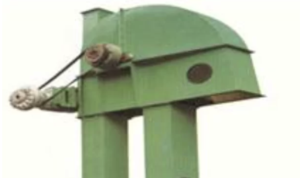

Scraper grain conveyors and buried scraper conveyors are two different types of chain conveyors commonly used for bulk material handling.
Both systems use a moving chain with scraper flights to transport materials, but their structures, conveying principles, applications, and installation methods are different.
Understanding the differences between these two conveyors can help users select the right equipment for grain handling, storage, and industrial conveying systems.
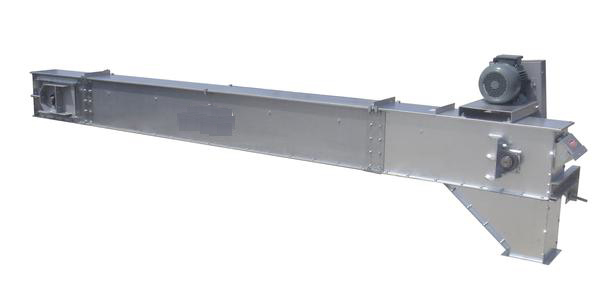
What Is a Scraper Grain Conveyor?
A scraper grain conveyor is mainly used for horizontal or slightly inclined transportation of grain and other bulk materials.
The conveyor consists of a chain, scraper flights, conveyor trough, drive system, and tensioning device. During operation, the chain moves continuously, and the scraper flights push the grain forward along the bottom of the conveyor.
Scraper grain conveyors are widely used in:
- Grain storage facilities
- Grain processing plants
- Feed mills
- Agricultural applications
They are suitable for conveying materials over relatively long distances while maintaining stable and continuous material flow.
What Is a Buried Scraper Conveyor?
A buried scraper conveyor, also called an en masse conveyor, is an enclosed chain conveyor where the scraper flights move inside a closed casing.
Unlike a traditional scraper conveyor, the material in a buried scraper conveyor moves together with the chain in a continuous material layer. The chain and scraper flights are partially buried inside the conveyed material.
This design allows the conveyor to handle large quantities of bulk materials with a compact structure.
Buried scraper conveyors are commonly used for:
- Grain
- Coal
- Cement
- Fertilizer
- Biomass
- Other bulk materials
Main Differences Between Scraper Grain Conveyor and Buried Scraper Conveyor
1. Conveying Principle
The main difference is how the material moves.
A scraper grain conveyor pushes the material forward through direct contact between the scraper flights and the material.
A buried scraper conveyor moves a continuous layer of material together with the chain, creating an en masse conveying effect.
2. Conveyor Structure
A scraper grain conveyor usually has an open or semi-enclosed conveying trough.
A buried scraper conveyor normally uses a fully enclosed casing, which helps reduce dust and material leakage.
3. Material Handling Capacity
Buried scraper conveyors are usually designed for higher-capacity conveying because the material moves as a continuous mass.
Scraper grain conveyors are more suitable for controlled grain transportation where gentle handling is required.
4. Application Conditions
Scraper grain conveyors are commonly selected for:
- Grain transfer
- Horizontal conveying
- Agricultural processing systems
Buried scraper conveyors are commonly selected for:
- Heavy-duty applications
- Large capacity systems
- Industrial bulk materials
Components of Scraper and Buried Scraper Conveyors
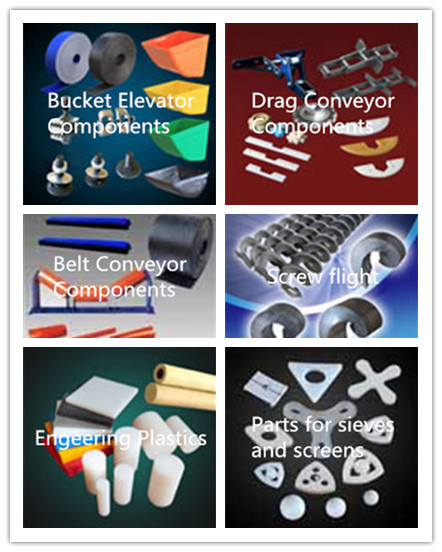
Both types of conveyors require reliable wear-resistant components, including:
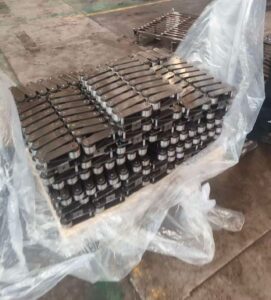
- Scraper chains
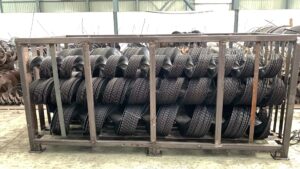
- Conveyor sprockets
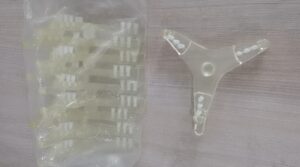
- UHMWPE scraper flights
- Nylon rollers
- Conveyor trough components
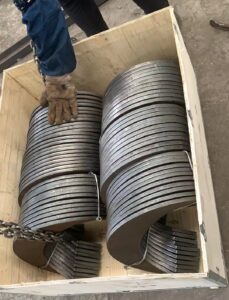
YT Conveyor manufactures customized chain conveyor components for scraper and buried scraper conveyor systems, including chains, flights, sprockets, and related wear parts according to customer drawings and application requirements.
How to Choose the Right Conveyor?
The selection between a scraper grain conveyor and a buried scraper conveyor depends on:
- Material characteristics
- Required capacity
- Conveying distance
- Installation space
- Operating environment
- Maintenance requirements
For grain handling systems, scraper grain conveyors are often preferred for stable and gentle transportation. For large-capacity industrial applications, buried scraper conveyors may provide better conveying efficiency.
Conclusion
Scraper grain conveyors and buried scraper conveyors are both effective solutions for bulk material handling, but they are designed for different operating conditions.
A scraper grain conveyor focuses on controlled transportation of grain and agricultural materials, while a buried scraper conveyor is designed for high-capacity enclosed conveying of various bulk materials.
Choosing the correct conveyor type can improve conveying efficiency, reduce maintenance requirements, and ensure reliable long-term operation.