

Let’s take the DL4013 Z bucket elevator bucket and chain as an example.
Z Elevator Bucket
Application
Our DL series elevator buckets are commonly used in Z-type bucket elevators.
Below is the drawing for the DL4013 bucket.
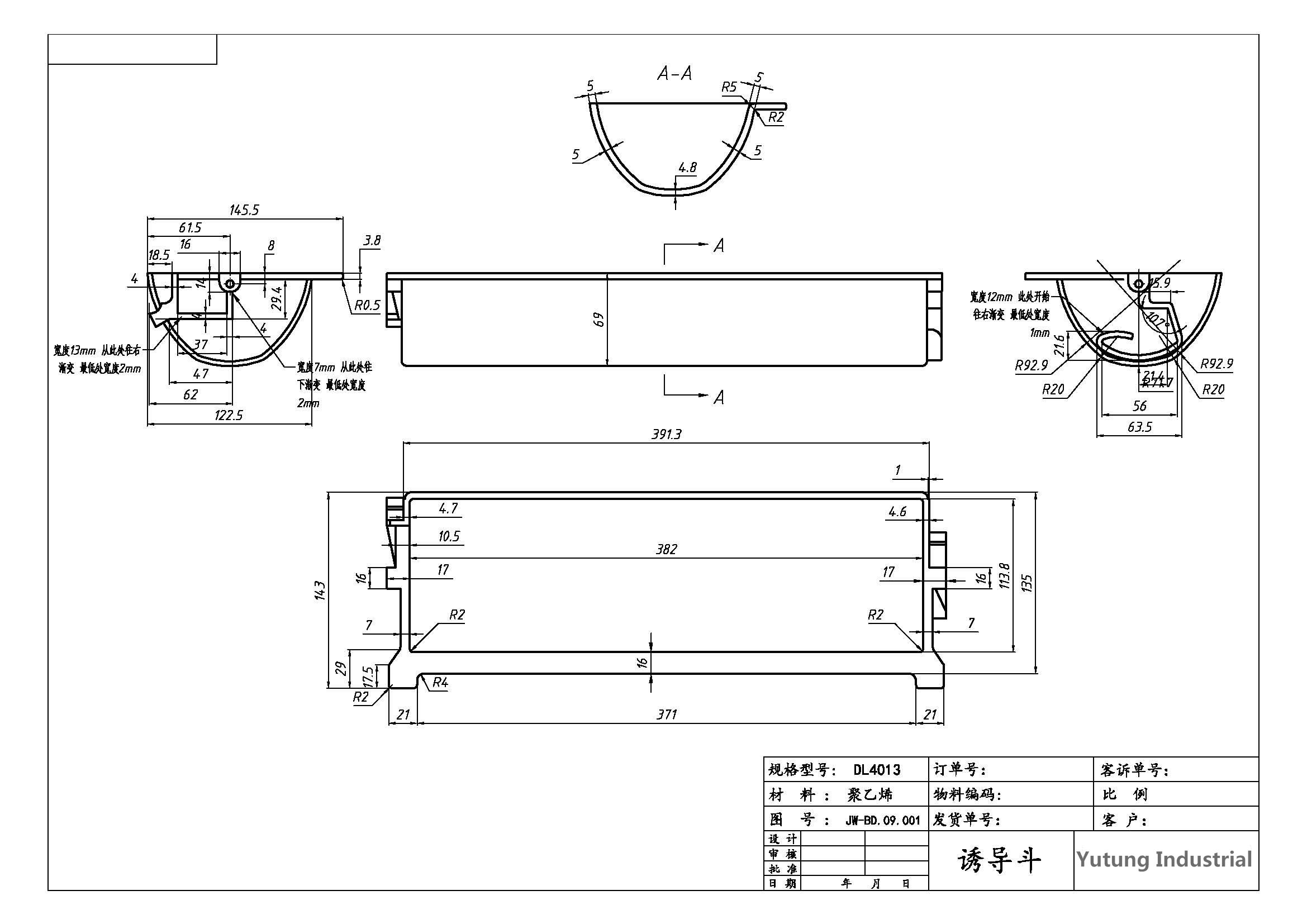
DL4013 is only one example. If your existing bucket is closer to the DL3319 design, please check our detailed DL3319 Z bucket elevator bucket dimensions and side mounting guide. Similar-looking DL buckets from different equipment manufacturers may have different overall dimensions, hole positions and chain fixing structures, so confirmation against the drawing is essential.
Bucket Materials
HDPE: HDPE is one of the most commonly used materials for plastic elevator buckets, including many of our D series and CC series models. It offers good impact resistance, low weight, and reliable performance in general grain and bulk material handling applications.
However, we do not recommend HDPE for our DL series Z-type elevator buckets. Because of the bucket shape and operating requirements, HDPE DL buckets are more likely to deform, especially around the front opening. Once the bucket mouth loses its original shape, the edge may no longer remain straight, which can affect stable material loading and discharge during operation.
For this reason, other materials are normally preferred for DL series buckets depending on the operating temperature and application. You can also explore our full range of bucket elevator components, including plastic and steel elevator buckets, elevator chains, belts, bolts, pulleys, and other compatible accessories.
PP: PP is one of the most commonly used materials for our DL series Z-type elevator buckets. Food-grade PP material is available for applications in grain, feed, food, and other bulk material handling systems.
Compared with HDPE, PP provides more uniform shrinkage during molding for this bucket design, helping the DL bucket maintain a more consistent shape and a straighter, cleaner front opening. This makes PP a suitable and widely used material for Z-type elevator buckets.
Nylon: Nylon is less commonly used for our DL series Z-type elevator buckets. Because nylon has different molding shrinkage characteristics from PP, the finished bucket dimensions can vary slightly and may become larger than the standard PP version.
This dimensional difference can affect the fit between the bucket and the elevator chain, making installation and operation less stable. For this reason, PP is generally the preferred material for DL series buckets unless there is a specific operating requirement for nylon.
ABS: ABS elevator buckets offer good impact resistance, dimensional stability, and overall mechanical performance. They are suitable for applications where higher strength and toughness are required. The main disadvantage of ABS is its higher material cost compared with commonly used options such as PP or HDPE.
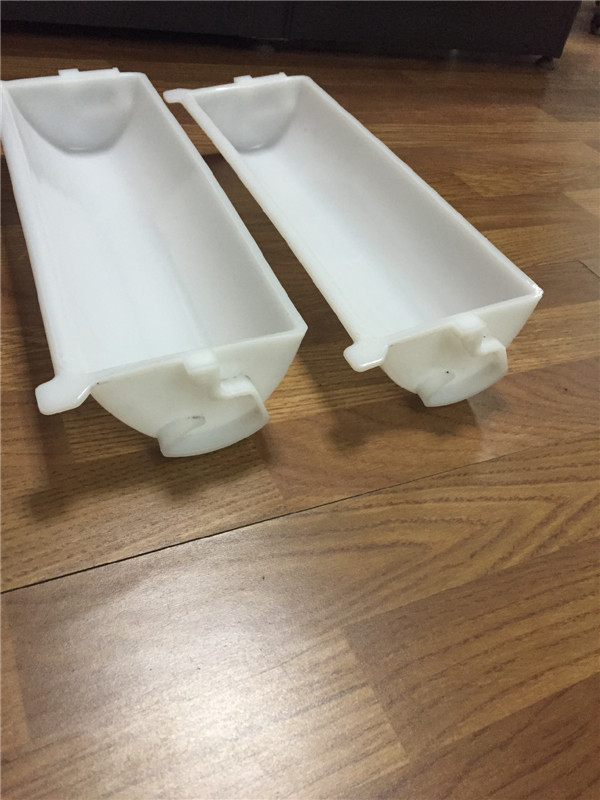
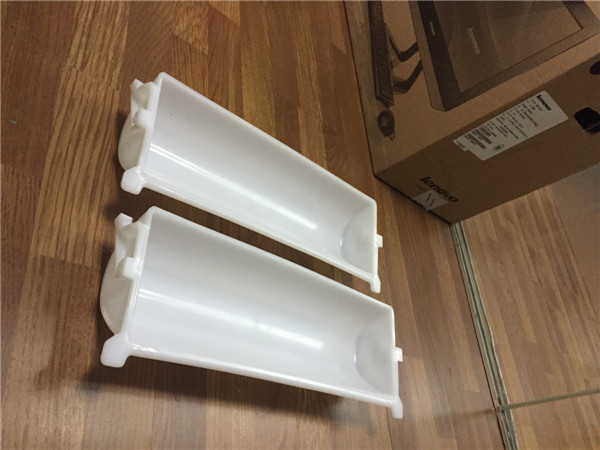
Bucket Pictures
Working Conditions in Cold and Hot area
Cold Conditions: PP buckets are generally not recommended for very low-temperature environments because polypropylene becomes more brittle as the temperature decreases and may crack under impact. As a general guideline, PP buckets should not be used when the actual operating temperature is below approximately -10°C. However, if the equipment operates indoors in a temperature-controlled workshop, the actual working temperature should be considered rather than the outdoor temperature.
Hot Conditions: Nylon and PTFE are suitable for higher-temperature applications. Nylon buckets can typically operate at approximately 80–90°C, while PTFE can withstand temperatures up to around 120°C. HDPE and PP may soften when temperatures approach 60°C, which can reduce bucket performance. Bucket material should therefore be selected according to the actual operating temperature.
Transportation Considerations
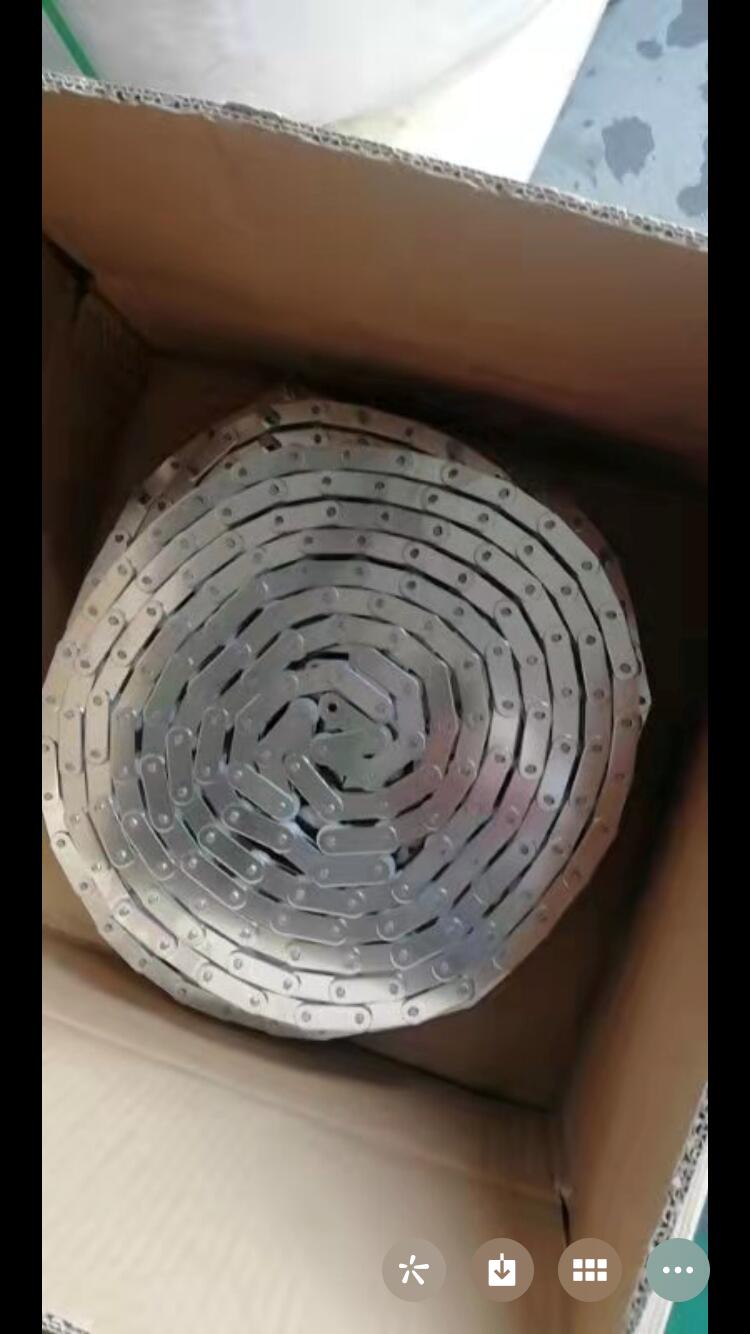
Elevator buckets are usually stacked together during packing, so improper packing may cause deformation. This risk can increase during long-distance sea transportation, especially when the containers are exposed to higher temperatures. To reduce the possibility of deformation, we use larger packaging and arrange the products carefully. The chains are placed at the bottom of the package, while the elevator buckets are packed on top to avoid excessive pressure and maintain their shape during transportation.
Elevator Chain
Chain Materials
We offer three chain material options for different working conditions and budgets.
Full Stainless Steel Option: The side plates, pins, and rollers are all made of SS304 stainless steel.
This option offers excellent corrosion resistance, durability, and overall performance, especially for humid, corrosive, or food-related applications. The only drawback is the higher cost compared with carbon steel or mixed-material chain options.
Alloy steel with Nickle plated
Economic Chain Material Option (Alloy steel with nickel plating): The side plates are made of 40Mn steel with nickel plating, while the pins are made of 40Cr steel with nickel plating. The rollers can be made of nickel-plated alloy steel or SS201 stainless steel.
This is a cost-effective option that still provides good performance for general applications.
For the rollers, we normally recommend SS201 stainless steel instead of a nickel-plated surface. During operation, the rollers are in continuous contact with the sprockets, and the nickel coating may gradually wear off. SS201 stainless steel therefore offers a more practical and durable solution for this part.
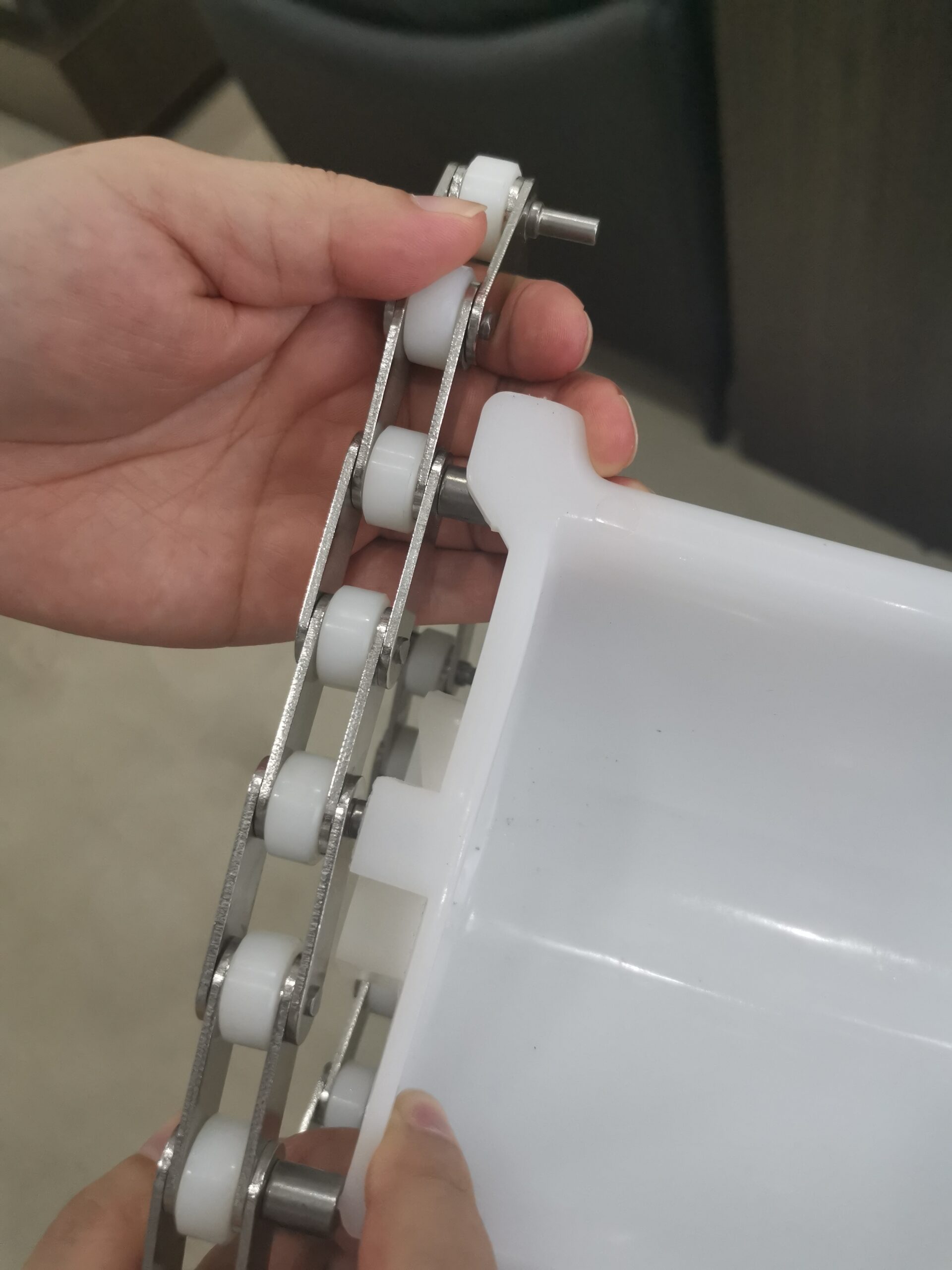
Stainless Steel and Nylon Combination: The side plates and pins are made of SS304 stainless steel, while the rollers are made of nylon.
This is a popular combination because nylon rollers generate less noise during operation and have good self-lubricating properties, which can help reduce friction and maintenance requirements.
However, nylon is not recommended for very low-temperature applications because it may become more brittle and more susceptible to cracking or damage. For high-temperature, heavy-duty, or demanding operating conditions, metal rollers are generally a better choice.
Since the rollers engage directly with the sprocket teeth, metal rollers can also provide better wear resistance and temperature resistance in harsher applications.
Drawing of Z Bucket Chain for DL4013
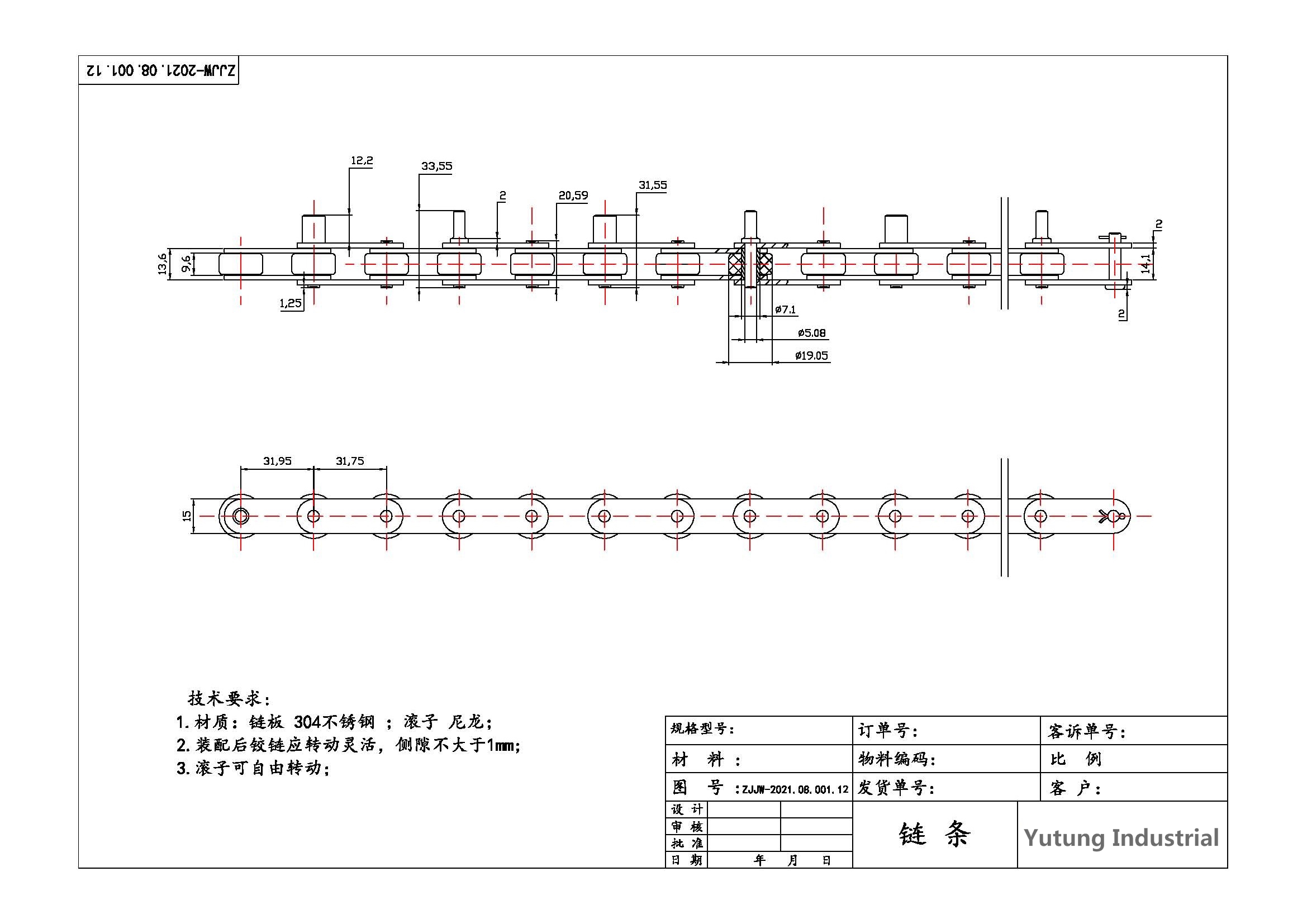
For complete Z bucket elevator system matching, explore our bucket elevator components, including elevator buckets, chains, belts, bolts, pulleys, and other compatible accessories for bulk material handling systems.


