

Oil Nylon Material Overview
Oil nylon is a modified engineering plastic produced by adding lubricating oil during the polymerization process.
This improves its self-lubricating performance and reduces friction in mechanical applications.
The material is widely used where low friction, wear resistance, and long service life are required.

Manufacturing Process
- Nylon Sheet → Produced by casting process
- Nylon Rod and Tube → Produced by extrusion process
The casting process allows higher molecular weight and better mechanical performance compared to standard nylon materials.

Key Features
- Built-in self-lubrication reduces the need for external lubrication
- High wear resistance for long service life
- Good impact resistance and structural strength
- Easy machining for custom components
- Suitable for dry-running applications
Applications
Oil nylon materials are commonly used in mechanical components such as:
- Bearings and bushings
- Gears and sprockets
- Shaft sleeves
- Friction plates
- Bearing blocks
Oil nylon sheets, rods, and tubes can also be machined into sprockets, bushings, guide parts, and wear components for our chain conveyor components and other material handling systems.
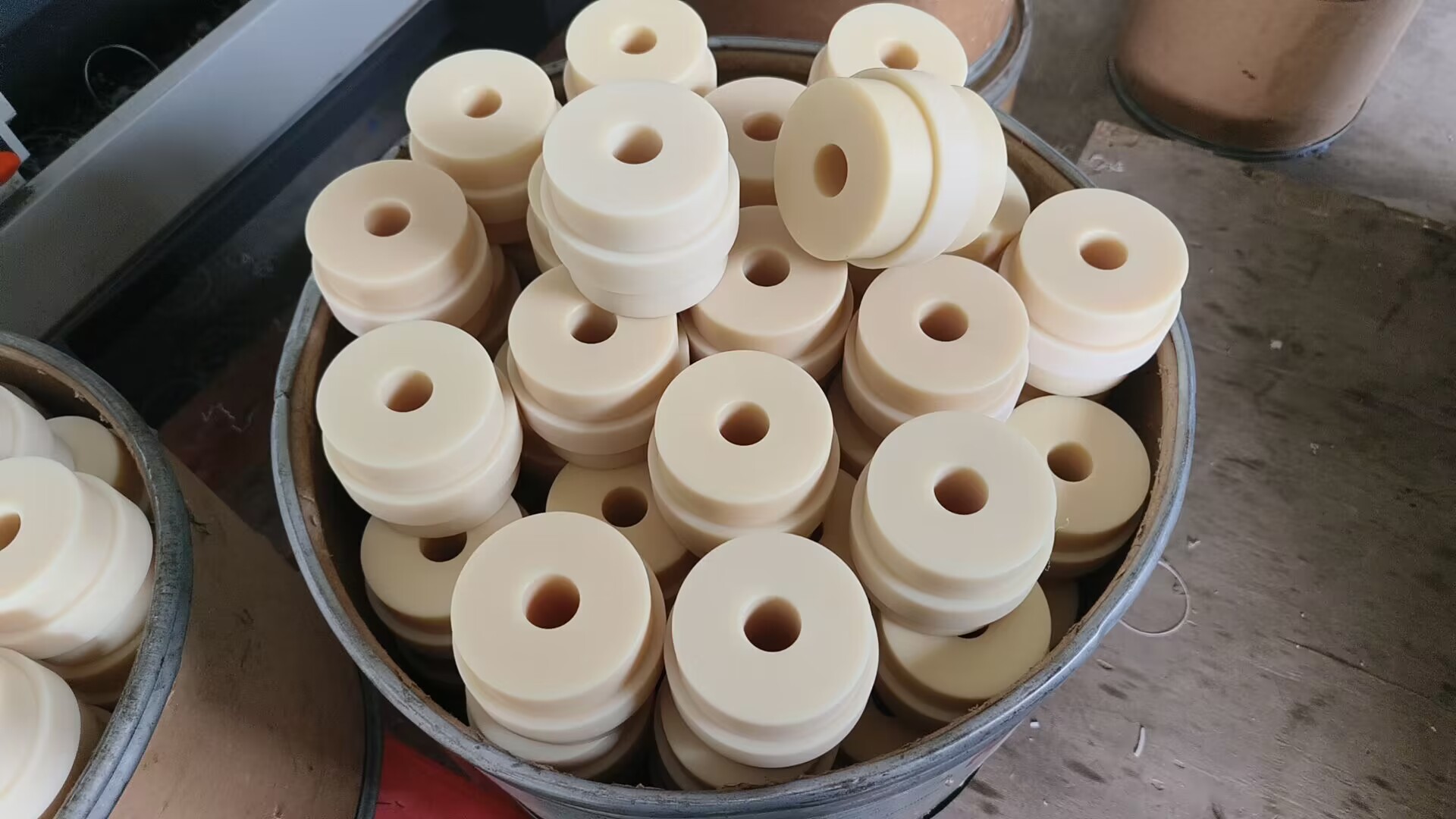
For higher wear resistance and longer service life, UHMW PE materials are also available as an alternative solution.
Oil Nylon vs UHMW PE – Material Comparison
For applications requiring higher wear resistance and lower friction, UHMW PE is often the preferred choice.
| Property | Oil Nylon (PA) | UHMW PE |
|---|---|---|
| Friction | Low (self-lubricating) | Very low (excellent self-lubrication) |
| Wear Resistance | Good | Excellent (much higher) |
| Impact Resistance | Good | Outstanding |
| Weight | Light | Very light |
| Noise | Low | Very low |
| Moisture Absorption | Higher | Very low |
| Best Application | Bearings, gears, bushings | Liners, chutes, conveyors |
PU vs UHMW PE vs Nylon – Material Selection Guide
| Property | PU Polyurethane | UHMW PE | Nylon (PA / Oil Nylon) |
|---|---|---|---|
| Wear Resistance | Excellent (up to 4× UHMW) | Very good | Good |
| Friction | Medium | Very low (best) | Low |
| Impact Resistance | Excellent | Outstanding | Good |
| Elasticity | High | Low | Medium |
| Moisture Absorption | Low | Very low | Higher |
| Noise | Low | Very low | Low |
| Best Application | High wear & heavy impact | Low friction & smooth flow | Mechanical parts & load-bearing |
- Choose PU → for extreme wear and high-impact conditions
- Choose UHMW PE → for low friction and smooth material flow
- Choose Nylon → for mechanical components like gears and bearings
Not sure which material is suitable for your application? Send us your working conditions, and we will recommend the best solution.
3 Quick Questions to Choose the Right Material
- Is your application facing heavy wear or strong impact?
→ Choose PU Polyurethane for maximum durability - Do you need smooth material flow and low friction?
→ Choose UHMW PE to reduce sticking and improve efficiency - Are you making mechanical parts like gears or bushings?
→ Choose Nylon (PA) for strength and machinability
Still not sure? Send us your application details, and we will recommend the best material for you.
Looking for Low-Friction Plastic Components?
Send us your drawing or application details, and we will recommend the most suitable material solution.


