
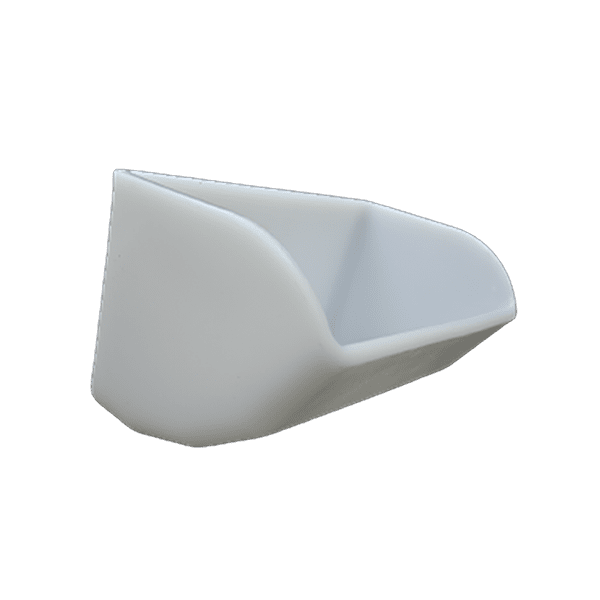
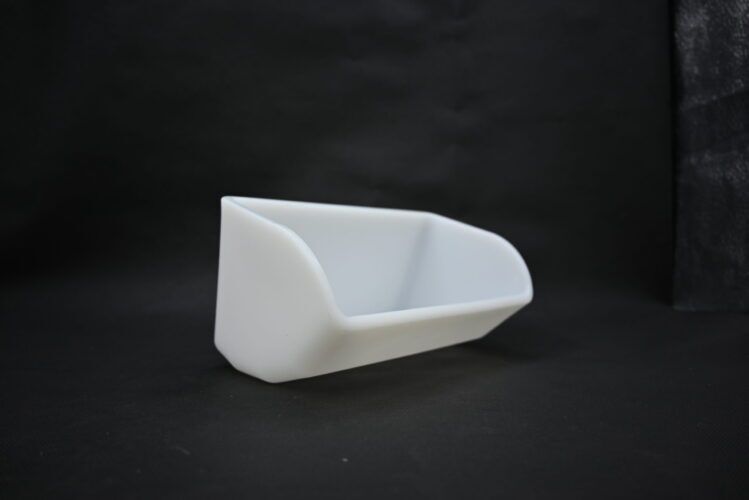
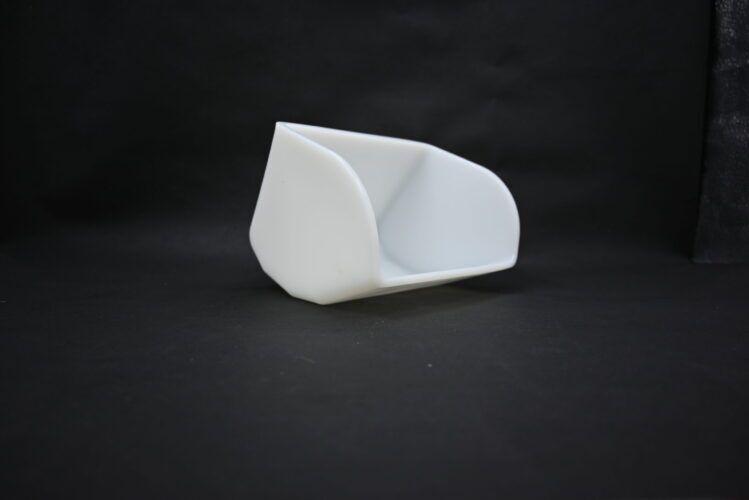
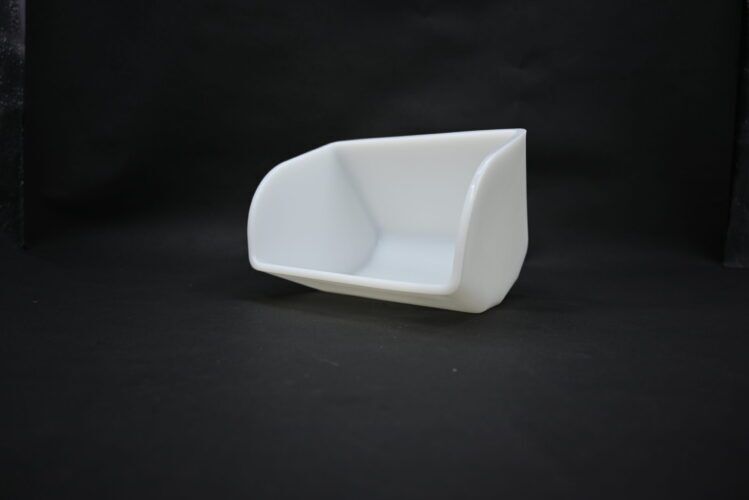
CC Type Elevator Bucket Overview
CC type elevator bucket is designed based on the traditional CC bucket style, offering a high-strength and high-efficiency solution for agricultural bucket elevator systems. It can be used as a direct replacement for Tapco CC series buckets in many applications.
Design Advantage
The unique side structure of the CC bucket improves material filling efficiency compared with standard deep bottom buckets. This design increases bucket capacity and allows shorter installation spacing, which helps improve overall conveying efficiency.
As part of a complete conveying system, CC buckets can be used together with our bucket elevator components, including elevator belts, bolts, pulleys, and belt fasteners.
Applications
CC type elevator buckets are widely used in agricultural material handling systems, including:
- Grain conveying
- Feed processing
- Seed handling
- Fertilizer transport
- Chemical and bulk material conveying
Material Options
Different materials are available to match various working conditions:
HDPE Buckets
HDPE CC buckets are suitable for general agricultural applications, including grains, feed, seeds, chemicals, sands, salts, and fertilizers. They provide good performance for free-flowing materials.
Nylon Buckets
Nylon CC buckets offer higher strength and better abrasion resistance, making them suitable for more demanding applications such as grain, soybeans, chemicals, sand, and fertilizer conveying under rough conditions.
PU Buckets
PU (urethane) CC buckets are ideal for handling abrasive and heavy-duty materials, including pelletized feed, high-fat feed, molasses-based materials, soybeans, rice, and barley. They are well suited for severe working environments.
Use advice
- Suitable for high-speed centrifugal discharge and light bulk material lifting
- A, B, and C sizes are shown in the below table are for HDPE material bucket size, Nylon and PU bucket sizes will increase by about 2%
- Recommend using “(Z-Y)+5% as the usable capacity for engineering design
Technical Drawing
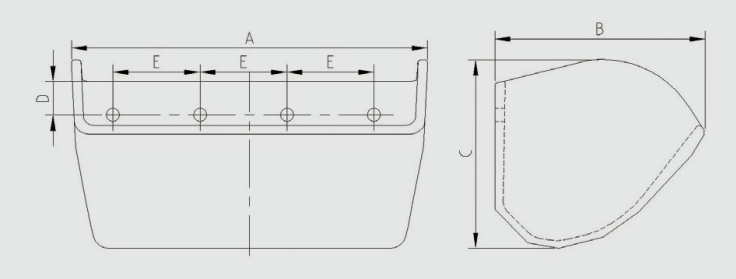
Specifications
| Model | Bucket Dimension(mm) | Mounting Holes(mm) | Capacity(L) | ||||||
|---|---|---|---|---|---|---|---|---|---|
| Length A | Proj. B | Depth C | From Top D | Hole Centres E | No. of Holes | Hole diameter | Usable Level (Z-Y)+10% | Water Level (Z-Y) | |
| CC5X4 | 140 | 114 | 108 | 36.5 | 81 | 2 | 7 | 0.69 | 0.63 |
| CC6X4 | 165 | 114 | 108 | 36.5 | 111.1 | 2 | 7 | 0.81 | 0.74 |
| CC7X4 | 191 | 114 | 108 | 36.5 | 68.3 | 3 | 7 | 0.94 | 0.85 |
| CC6X5 | 165 | 140 | 127 | 42.9 | 111.1 | 2 | 7 | 1.28 | 1.16 |
| CC7X5 | 191 | 140 | 127 | 42.9 | 68.3 | 3 | 7 | 1.45 | 1.32 |
| CC8X5 | 216 | 140 | 127 | 42.9 | 77.8 | 3 | 7 | 1.64 | 1.49 |
| CC9X5 | 244 | 142 | 124 | 42.9 | 92.1 | 3 | 7 | 1.76 | 1.60 |
| CC10X5 | 267 | 140 | 127 | 42.9 | 104.8 | 3 | 7 | 2.06 | 1.87 |
| CC11X5 | 292 | 140 | 127 | 42.9 | 76.2 | 4 | 7 | 2.23 | 2.09 |
| CC8X6 | 217 | 168 | 152 | 50.8 | 77.8 | 3 | 7 | 2.45 | 2.23 |
| CC9X6 | 244 | 172 | 150 | 50.8 | 92.1 | 3 | 7 | 2.59 | 2.35 |
| CC10X6 | 267 | 169 | 147 | 50.8 | 104.8 | 3 | 7 | 2.86 | 2.60 |
| CC11X6 | 294 | 171 | 150 | 50.8 | 76.2 | 4 | 7 | 3.30 | 3.00 |
| CC12X6 | 318 | 170 | 152 | 50.8 | 85.7 | 4 | 7 | 3.52 | 3.20 |
| CC13X6 | 342 | 174 | 150 | 50.8 | 92.1 | 4 | 7 | 3.74 | 3.40 |
| CC10X7 | 268 | 200 | 178 | 55.6 | 104.8 | 3 | 9 | 4.26 | 3.87 |
| CC11X7 | 294 | 200 | 178 | 55.6 | 76.2 | 4 | 9 | 4.47 | 4.06 |
| CC12X7 | 319 | 200 | 178 | 55.6 | 85.7 | 4 | 9 | 4.82 | 4.38 |
| CC13X7 | 342 | 201 | 170 | 55.6 | 92.1 | 4 | 9 | 4.84 | 4.40 |
| CC14X7 | 370 | 200 | 178 | 55.6 | 76.2 | 5 | 9 | 5.48 | 4.98 |
| CC15X7 | 395 | 200 | 178 | 55.6 | 82.6 | 5 | 9 | 6.04 | 5.49 |
| CC16X7 | 421 | 200 | 178 | 55.6 | 73 | 6 | 9 | 6.33 | 5.75 |
| CC12X8 | 319 | 225 | 200 | 50.8 | 85.7 | 4 | 9 | 6.73 | 6.12 |
| CC13X8 | 344 | 225 | 200 | 50.8 | 92.1 | 4 | 9 | 7.29 | 6.63 |
| CC14X8 | 370 | 225 | 196 | 50.8 | 76.2 | 5 | 9 | 7.85 | 7.14 |
| CC16X8 | 418 | 226 | 202 | 50.8 | 73 | 6 | 9 | 9.13 | 8.30 |
| CC18X8 | 474 | 232 | 199 | 50.8 | 79.4 | 6 | 9 | 11.00 | 10.00 |
| CC20X8 | 522 | 235 | 203 | 50.8 | 88.9 | 6 | 9 | 12.10 | 11.00 |
| CC18X10 | 483 | 292 | 264 | 57.2 | 79.4 | 6 | 9 | 15.00 | 16.49 |
| CC20X10 | 533 | 292 | 264 | 57.2 | 88.9 | 6 | 9 | 16.48 | 18.14 |
| CC21X10 | 559 | 292 | 264 | 57.2 | 90 | 6 | 9 | 17.30 | 19.04 |
| CC22X10 | 584 | 292 | 264 | 57.2 | 101.6 | 6 | 9 | 18.12 | 19.94 |
| CC23X10 | 610 | 292 | 264 | 57.2 | 85.7 | 7 | 9 | 18.94 | 20.84 |
| CC24X10 | 635 | 292 | 264 | 57.2 | 88.9 | 7 | 9 | 19.78 | 21.76 |
Note: Fitting holes and hole diameter can be customized.
👉 Not sure which bucket fits your system?
Tell us your application or required size — we will recommend the right model within 24 hours.
Performance Advantage
Compared with conventional bucket designs, CC buckets improve material flow within the elevator, increasing conveying efficiency and overall system performance.
Replacement Compatibility
CC type elevator buckets can be used as an alternative to well-known designs such as Tapco CC series, providing a reliable and cost-effective replacement option.
Engineering Considerations
For optimal performance, the following factors should be considered:
- Elevator speed
- Bucket spacing
- Material characteristics
- Installation configuration
You may also be interested in
- S Type Elevator Bucket S Type Elevator Bucket (Shallow Bottom, Inch Size)
- CC Type Elevator Bucket CC Type Elevator Bucket (Tapco CC Style, High Efficiency)
- DS Type Elevator Bucket DS Type Elevator Bucket (Deep Bottom, Metric Size)
- DQ Type Elevator Bucket DQ Type Elevator Bucket (Shallow Bottom, Metric Size)
- Elevator Bucket Fang Bolts
- PVC Elevator Belt
Looking for a reliable replacement for your CC elevator buckets?
Send us your specifications or drawings, and we’ll help you find the right solution.
Relevant Blog:
What’s the difference of D elevator cups and CC elevator cups?
How to select the plastic bucket of the bucket elevator correctly?


