

Elevator buckets are key carrying parts in bucket elevator systems. They are used to lift grain, feed, rice, seed, flour, fertilizer, cement, minerals, and many other bulk materials. When selecting replacement buckets or designing a new bucket elevator system, one common question is: should we use plastic elevator buckets or steel elevator buckets?
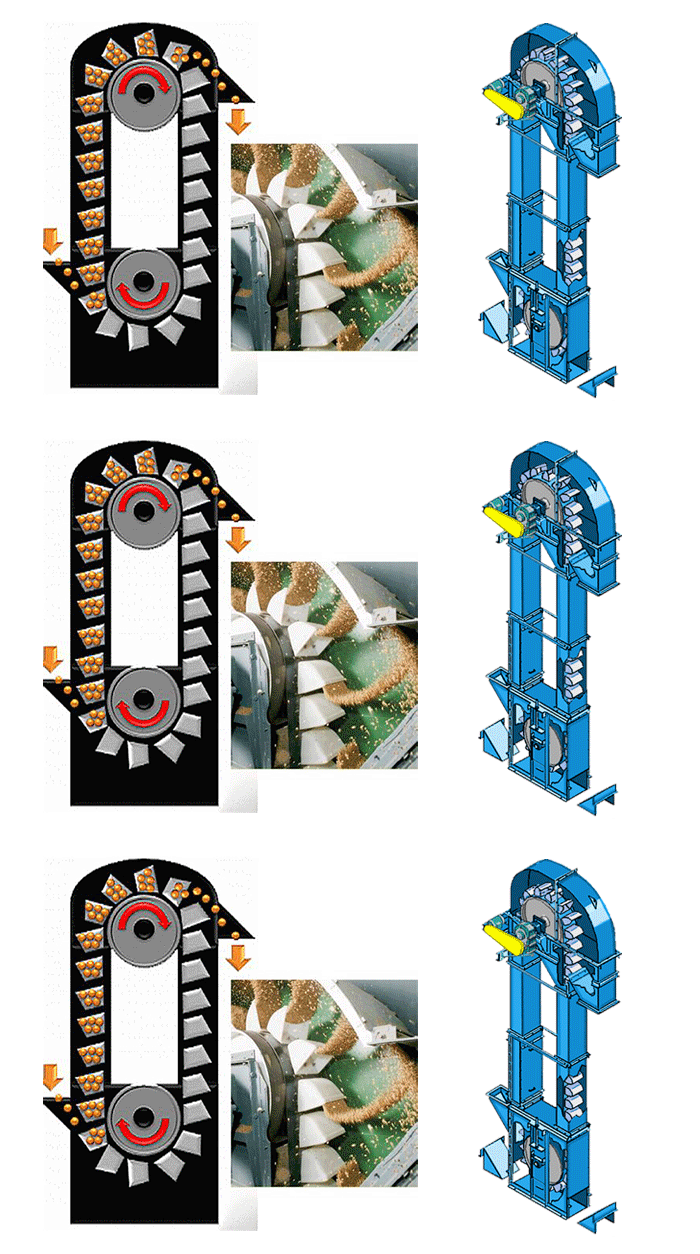
There is no single answer for every project. Plastic buckets and steel buckets each have their own advantages. The right choice depends on the material being handled, working temperature, impact, abrasion, corrosion, elevator speed, bucket size, and maintenance requirements.
YT Conveyor manufactures and supplies bucket elevator components, including plastic elevator buckets, steel elevator buckets, elevator bolts, belts, pulleys, and related replacement parts.

What Are Plastic Elevator Buckets?
Plastic elevator buckets are usually made from HDPE, nylon, reinforced nylon, PU, or other engineering plastics. They are widely used in grain handling, feed mills, seed plants, rice mills, flour mills, and many general bulk material handling systems.
Plastic buckets are popular because they are lightweight, corrosion-resistant, and cost-effective for many agricultural and industrial applications.
You can view our full range of plastic and steel elevator buckets for different bucket elevator systems.

What Are Steel Elevator Buckets?
Steel elevator buckets are usually made from carbon steel, stainless steel, or abrasion-resistant steel. They are used when higher strength, higher temperature resistance, or stronger impact resistance is required.
Steel buckets can be stamped, deep drawn, or welded according to the design. For example, DS steel elevator buckets are suitable for deep bottom gravity discharge applications, while DQ steel elevator buckets are designed for shallow bottom centrifugal discharge applications.
For special bucket sizes or structures, welded customized steel buckets may also be used.

Key Differences Between Plastic and Steel Elevator Buckets
Weight
Plastic elevator buckets are much lighter than steel buckets. This can reduce the load on the elevator belt, pulleys, motor, and drive system.
Lower weight can also help reduce energy consumption and make installation easier, especially when many buckets are installed on a long elevator belt.
Steel buckets are heavier. This may be an advantage in some heavy-duty conditions, but it also increases the load on the system.
Strength and Impact Resistance
Steel buckets usually have higher structural strength and better resistance to heavy impact. They are suitable for heavier materials, larger particles, and more demanding industrial applications.
Plastic buckets are strong enough for many grain, feed, seed, and light bulk material applications. However, if the material has sharp edges, high impact, or very heavy density, steel buckets may be safer.
Wear Resistance
Wear resistance depends not only on plastic or steel, but also on the exact material and working condition.
For many grain and feed applications, HDPE or nylon buckets perform well and can provide long service life. For abrasive materials, steel buckets or special engineering plastic materials may be considered.
If the material is sharp, hard, or highly abrasive, steel buckets may offer better durability. If the main concern is smooth handling and reduced material damage, plastic buckets may be more suitable.
Corrosion Resistance
Plastic elevator buckets have excellent corrosion resistance. They do not rust and are suitable for many humid or mildly corrosive environments.
Carbon steel buckets may rust if the surface protection is damaged. Stainless steel buckets provide better corrosion resistance and are often used for food, chemical, humid, or corrosive applications.
If corrosion is the main problem, plastic buckets or stainless steel buckets should be considered.
Temperature Resistance
Steel buckets are better for high-temperature working conditions. Carbon steel or stainless steel buckets can handle temperatures that are not suitable for standard plastic buckets.
Plastic buckets have temperature limits depending on the material. HDPE is common for normal temperature applications. Nylon, reinforced nylon, or PU may be selected for higher temperature or tougher working conditions, but they still cannot replace steel in very high-temperature applications.
Noise and Belt Protection
Plastic buckets are usually quieter during operation and gentler to the elevator belt and casing. They can help reduce noise and impact in many conveying systems.
Steel buckets are stronger, but they may produce more noise and cause more impact if the system is not well adjusted.
Cost
Plastic buckets are usually more cost-effective for standard agricultural and grain handling applications. They are lightweight, easy to install, and suitable for large quantity replacement.
Steel buckets usually have a higher initial cost, especially stainless steel or customized welded types. However, in heavy-duty or high-temperature applications, the longer service life may justify the cost.
Comparison Table: Plastic vs Steel Elevator Buckets
| Factor | Plastic Elevator Buckets | Steel Elevator Buckets |
|---|---|---|
| Common materials | HDPE, nylon, reinforced nylon, PU | Carbon steel, stainless steel, abrasion-resistant steel |
| Weight | Lightweight | Heavier |
| Corrosion resistance | Excellent, no rust | Carbon steel may rust; stainless steel is better |
| Temperature resistance | Limited by plastic material | Better for high temperature |
| Impact resistance | Suitable for normal applications | Better for heavy impact |
| Noise | Lower noise | Higher noise |
| Belt load | Lower load on belt and drive system | Higher load |
| Cost | Usually more economical | Usually higher |
| Common use | Grain, feed, seed, rice, light bulk materials | Cement, minerals, hot material, abrasive or heavy-duty applications |
When to Choose Plastic Elevator Buckets
Plastic elevator buckets are usually suitable when:
- The material is grain, feed, seed, rice, flour, or light bulk material.
- The working temperature is normal.
- Corrosion resistance is important.
- Lower bucket weight is preferred.
- Noise reduction is helpful.
- Material damage should be reduced.
- Large quantity replacement needs cost control.
Common plastic bucket materials include HDPE, nylon, reinforced nylon, and PU. The best material depends on temperature, abrasion, and impact.
For some industrial applications, AA industrial elevator buckets can also be used as plastic alternatives to traditional steel buckets.
When to Choose Steel Elevator Buckets
Steel elevator buckets are usually suitable when:
- The material is heavy or abrasive.
- The working temperature is high.
- Strong impact resistance is required.
- The bucket elevator works in demanding industrial conditions.
- The bucket size or structure requires steel fabrication.
- Stainless steel is needed for food, chemical, or corrosive applications.
Steel buckets are often selected for cement, mining, fertilizer, hot materials, and heavy-duty bulk material handling.
Bucket Shape Also Matters
Material is only one part of the selection. Bucket shape is also important.
Deep bottom buckets are usually used when higher capacity and gravity discharge are needed. Shallow bottom buckets are often used for high-speed centrifugal discharge systems. Middle-depth buckets can match a wider range of elevator speeds.
For example, DS type elevator buckets are deep bottom metric buckets, while DQ type elevator buckets are shallow bottom metric buckets.
Choosing the right bucket shape helps improve discharge performance, reduce material backflow, and maintain stable capacity.
Matching Buckets with Bolts and Belts
Whether you choose plastic or steel buckets, they must match the elevator belt and bolts correctly.
The hole distance, hole diameter, bucket width, belt width, bolt size, and bucket spacing should be checked carefully. Incorrect matching may cause loose buckets, belt damage, vibration, or reduced capacity.
For fastening, YT Conveyor can provide ordinary elevator bolts and fanged elevator bolts. Fanged elevator bolts are often used when stronger anti-rotation fastening is required.
How to Choose the Right Elevator Bucket Material
Before selecting plastic or steel elevator buckets, check these points:
- What material will be conveyed?
- Is the material abrasive, hot, wet, sticky, or corrosive?
- What is the elevator capacity?
- What is the elevator speed?
- What is the bucket spacing?
- What is the belt width and thickness?
- What bucket model is currently used?
- Are drawings or old samples available?
- Is corrosion resistance or high temperature resistance more important?
- Is low weight or heavy-duty strength more important?
If you are replacing existing buckets, photos and key dimensions are very useful. Do not choose only by appearance. Hole distance, bucket depth, material, and discharge type should all match the system.
YT Conveyor Elevator Bucket Supply
YT Conveyor supplies plastic elevator buckets, steel elevator buckets, elevator bolts, belts, pulleys, and related bucket elevator replacement parts for grain, feed, seed, rice, flour, and bulk material handling systems.
You can visit our bucket elevator components page to view the main product range, or check our elevator bucket component projects to see real supply cases.
For project examples, you can also view our plastic elevator bucket project and steel elevator bucket project.
If you are not sure whether plastic or steel buckets are suitable for your system, send us your material, working temperature, photos, drawings, or old bucket dimensions. We can help recommend a practical bucket solution.
FAQ
Are plastic elevator buckets strong enough?
Yes. Plastic elevator buckets are strong enough for many grain, feed, seed, rice, flour, and light bulk material applications. For heavy, sharp, abrasive, or high-temperature materials, steel buckets may be more suitable.
When should I choose steel elevator buckets?
Steel elevator buckets are recommended for heavy-duty applications, abrasive materials, high-temperature materials, strong impact conditions, or when stainless steel is required for corrosion resistance.
Which material is most common for plastic elevator buckets?
HDPE is commonly used for normal grain and feed handling. Nylon, reinforced nylon, and PU may be selected for tougher conditions, higher wear resistance, or special working requirements.
Can plastic buckets replace steel buckets?
In some applications, yes. Plastic buckets can replace steel buckets when the working temperature and material conditions are suitable. However, for very hot, heavy, or highly abrasive materials, steel buckets may still be the better choice.
What information is needed to choose the right bucket?
Useful information includes material type, working temperature, bucket model, bucket dimensions, hole distance, belt width, elevator speed, required quantity, photos, drawings, or old samples.


