

Steel elevator buckets are selected when a bucket elevator requires a strong, rigid bucket structure and reliable performance under demanding conveying conditions. However, choosing a steel bucket is not simply a matter of selecting a familiar model number. The bucket profile, material, sheet thickness, mounting-hole arrangement and matching belt and bolts should all be confirmed together.
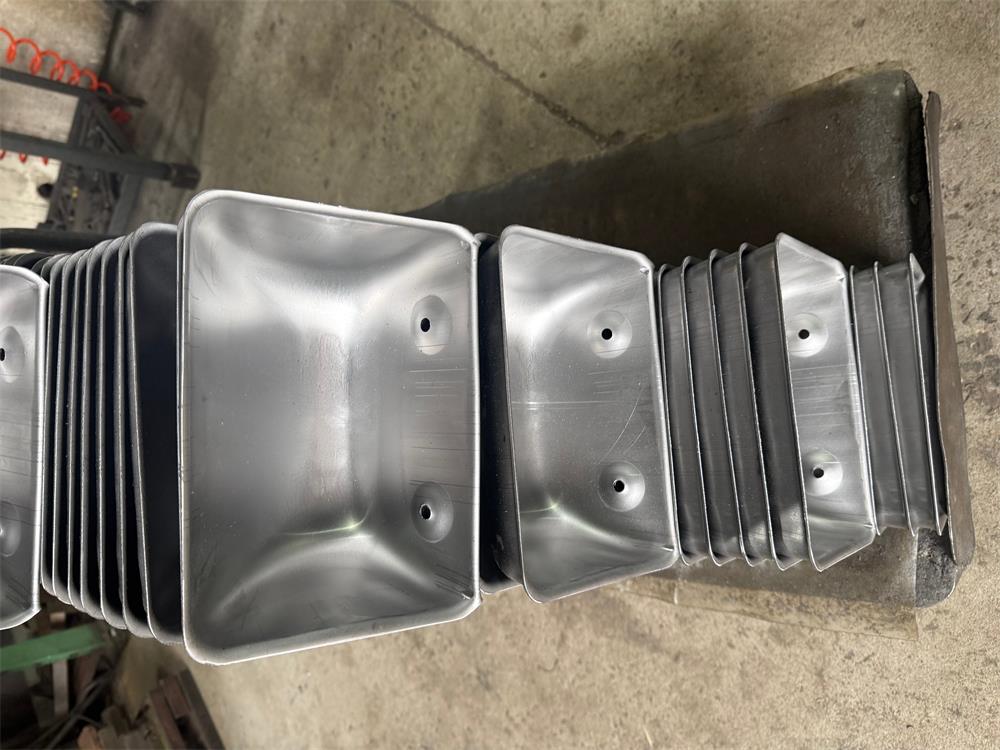
The buckets shown in this article are DS2316-2 deep bottom steel elevator buckets, manufactured from 2.0 mm carbon steel. They are one practical example of the details that should be checked before production or replacement.
For available DS models and dimensional information, see our DS deep bottom steel elevator bucket product page:
https://ytconveyor.com/product/ds-deep-bottom-steel-bucket/
Choose the Right Bucket Profile
Bucket profile affects material filling, carrying capacity and discharge. A deep bottom steel bucket has a deeper formed body than a shallow bucket, providing a larger internal space within its design dimensions.
DS steel buckets are one-piece stamped buckets. The formed shape has no welded joints, helping create a continuous bucket body. When selecting a bucket profile, confirm the existing bucket drawing or sample, elevator speed, bucket spacing, belt width and the characteristics of the conveyed material.
Confirm the Steel Material and Sheet Thickness
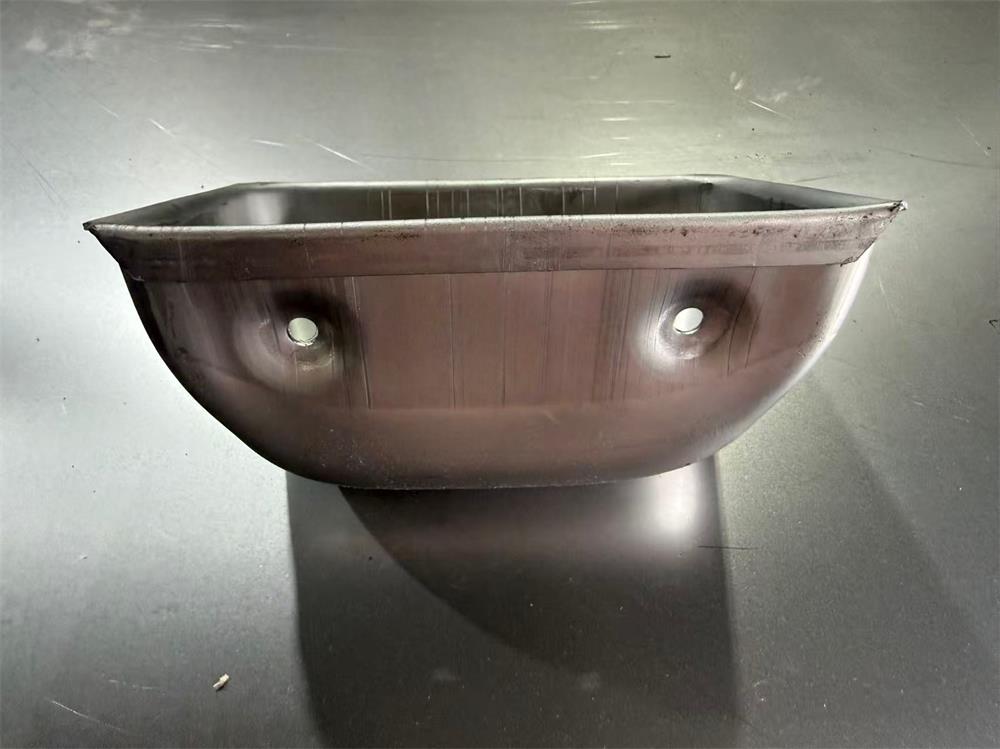
Steel elevator buckets can be manufactured in different materials according to the working environment. Carbon steel is a practical option for many general industrial conveying applications, while stainless steel may be considered where corrosion resistance or hygiene requirements are more important.
Thickness should also be confirmed with the application rather than selected by appearance alone. The DS2316-2 bucket shown here uses 2.0 mm carbon steel. This thickness is part of the actual product specification and should be matched with the bucket size, conveyed material, operating conditions and required service life.
For a broader overview of plastic and metal bucket materials, read:
https://ytconveyor.com/what-material-is-used-for-the-elevator-bucket/
Check Mounting Holes Before Ordering
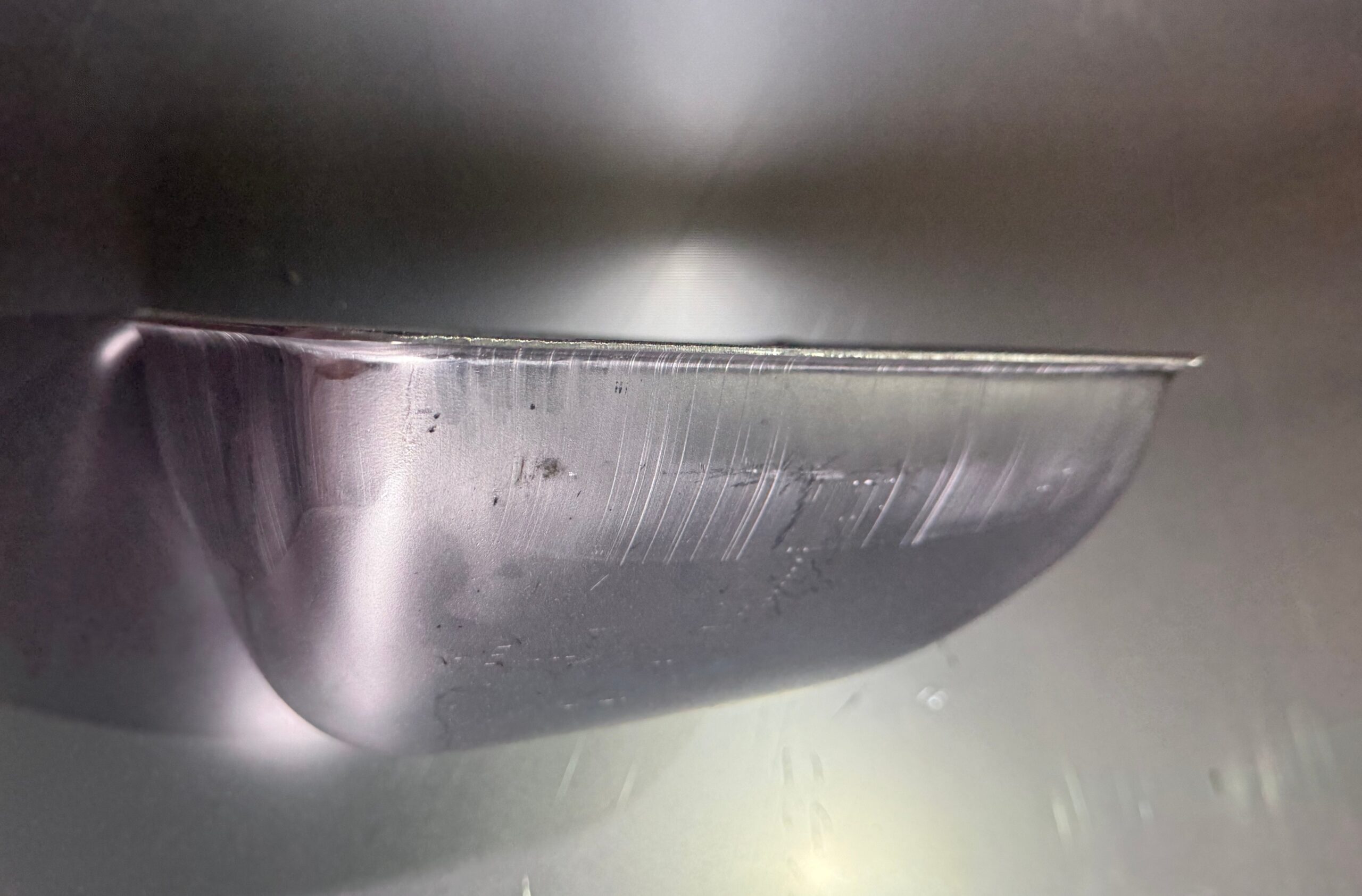
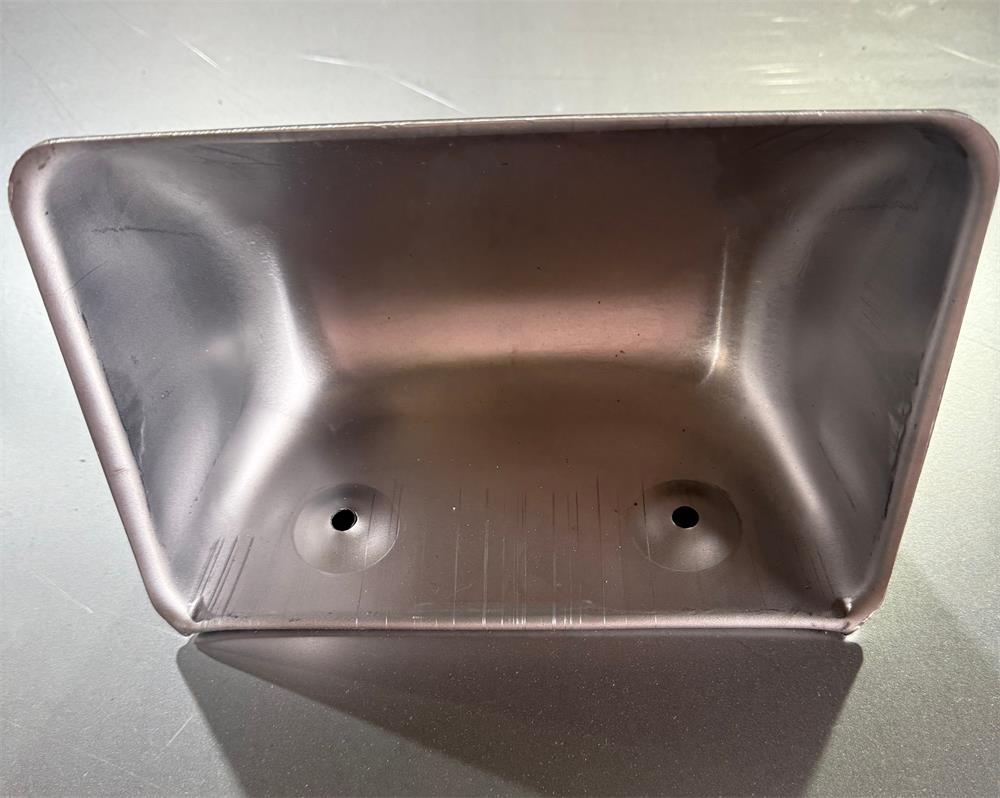
Mounting holes are one of the most important details when replacing or manufacturing elevator buckets. Hole diameter, hole centre distance, number of holes and hole type must match the elevator belt and fastening system.
The bucket in these photos has two recessed mounting holes. A recessed hole allows the bolt head to sit lower in the bucket surface, which can help reduce contact between the bolt head and other elevator components during operation. However, recessed holes are not automatically suitable for every system; the hole type must match the selected bolt and the existing belt arrangement.
Before placing an order, provide the bucket drawing, belt hole pattern or an existing bucket sample whenever possible. You can also refer to our guide:
https://ytconveyor.com/elevator-bucket-installation-hole-types/
Match the Bucket with Suitable Elevator Bolts
The bolt is not a minor accessory. It secures the bucket to the elevator belt and must match the bucket-hole diameter, belt thickness, bucket thickness and required clamping strength.
For applications with vibration or where stronger anti-rotation performance is needed, fanged elevator bolts can be considered. Their fangs help lock the bolt in position during tightening. The final bolt type and length should be selected according to the complete bucket-and-belt assembly.
Learn more about fanged elevator bolts:
https://ytconveyor.com/product/fang-elevator-bolt/
Select an Elevator Belt for the Operating Conditions
The elevator belt should be selected according to conveying duty, material characteristics, belt width, required tensile strength and operating environment. It must also be drilled accurately to match the bucket mounting-hole pattern.
For many grain, feed and agricultural conveying applications, see our PVC elevator belts:
https://ytconveyor.com/product/pvc-elevator-belt/
For heavier-duty conveying systems and more demanding material-handling conditions, see our rubber elevator belts:
https://ytconveyor.com/product/rubber-elevator-belt/
Both belt types can be manufactured with installation holes according to the required bucket and bolt arrangement.
Information to Confirm Before Manufacturing Steel Elevator Buckets
• Bucket model, drawing or existing sample
• Bucket dimensions and deep or shallow profile
• Material grade and sheet thickness
• Hole diameter, hole centres, quantity and hole type
• Matching elevator bolt type and length
• Elevator belt width, thickness and hole pattern
• Conveyed material and operating conditions
• Required quantity and surface-treatment requirements
DS Steel Buckets Manufactured for Your System
A correctly matched steel elevator bucket helps reduce installation problems and supports stable long-term operation. Whether you need a standard DS deep bottom steel bucket or a replacement bucket made according to an existing sample or drawing, send us the relevant dimensions and working details for confirmation.
Explore our DS deep bottom steel elevator bucket range:
https://ytconveyor.com/product/ds-deep-bottom-steel-bucket/


