- +86 13962947398
- sales@yutungindustrial.com
- WhatsApp 7day-24h


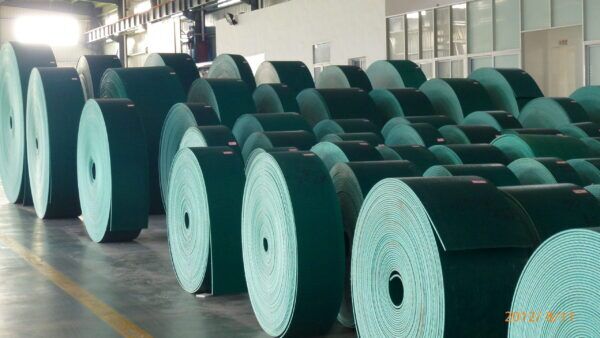
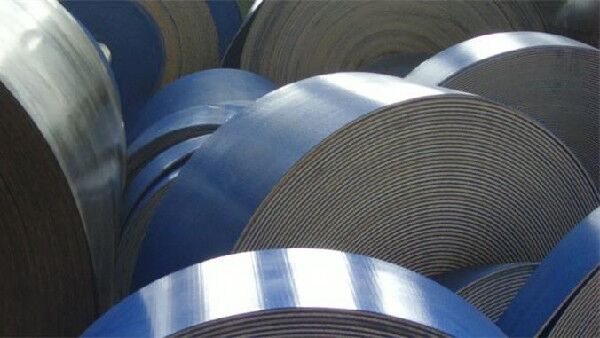
Product Overview
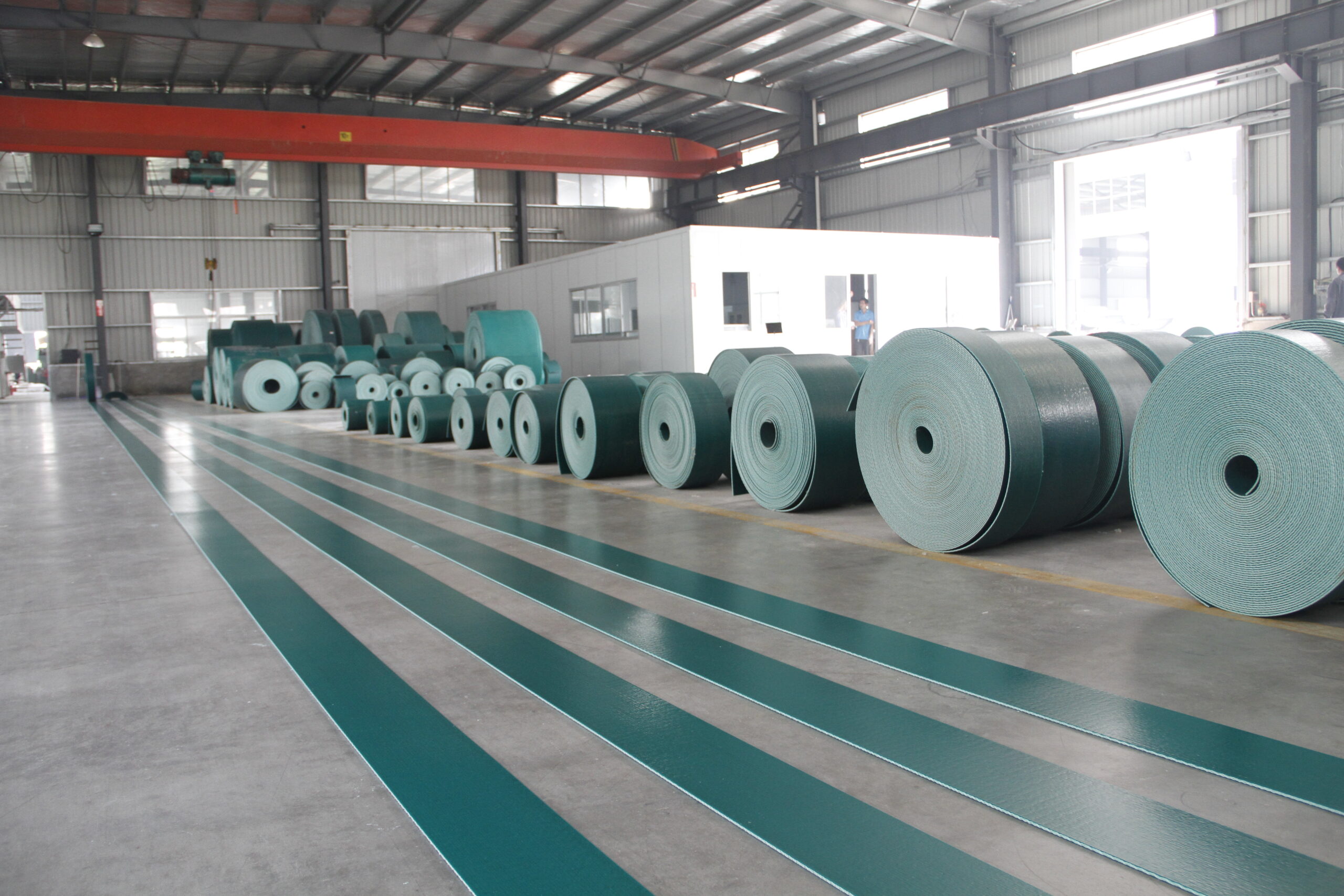
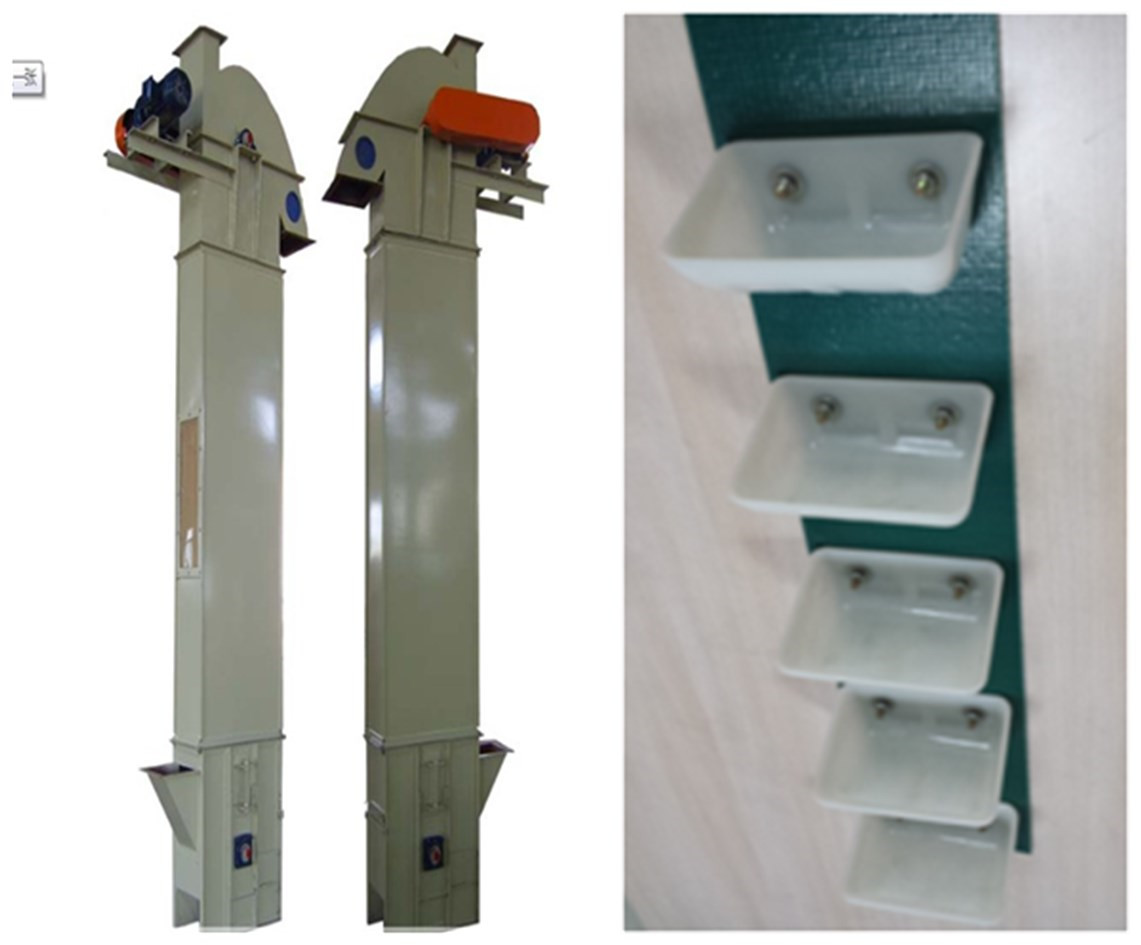
PVC elevator belts are widely used in bucket elevator systems for transporting bulk materials such as grain, feed, and agricultural products. Compared with rubber belts, PVC belts offer a lighter structure, making installation easier and reducing the load on the conveyor system.
Their non-absorbent surface provides excellent resistance to moisture, which is particularly important in agricultural and grain handling environments. In addition, PVC elevator belts require less maintenance and provide stable performance under normal operating conditions.
For most standard conveying applications, PVC elevator belts offer an ideal balance between performance, durability, and cost.
Solid Woven PVC Belt Construction
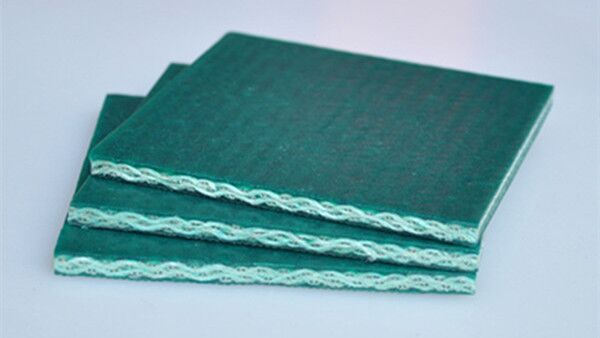
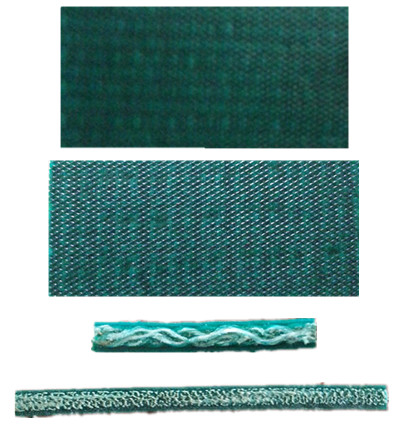
Our PVC elevator belt is a solid woven type belt, constructed from interwoven polyester and cotton yarns. The carcass is impregnated with PVC paste resin and plasticized under high temperatures, forming a durable and integrated structure.
Both sides of the belt are coated with PVC. One side features a smooth cover for efficient material handling, while the pulley side is designed with a friction-type surface to ensure reliable traction during operation.
This structure provides excellent flame resistance and anti-static performance, making the belt suitable for safe operation in bulk material handling environments.
Key Features of PVC Elevator Belts
PVC elevator belts are manufactured using a solid woven construction, where polyester and cotton yarns are interwoven into a single integrated unit. Unlike traditional rubber belts, which are built from multiple plies and may have uneven strength between layers, PVC belts provide uniform strength throughout the entire structure, eliminating the risk of delamination or surface peeling.
The belt carcass is fully impregnated with PVC resin, forming a tight and cohesive structure. This significantly improves tear resistance and enhances the belt’s ability to withstand bolt pull-through forces during installation and operation.
PVC material also offers excellent performance in various environments, including:
- Strong resistance to oil, moisture, and chemicals
- Good anti-corrosion and anti-abrasion properties
- Stable performance under continuous operation
Thanks to its lightweight yet solid structure, PVC elevator belts require lower driving power, reducing energy consumption. At the same time, their anti-static and flame-resistant properties contribute to safer operation in conveying systems.
In addition, PVC elevator belts can be produced in food-grade materials, making them ideal for grain handling and other hygienic applications.
Applications
- Grain elevators
- Feed processing plants
- Agricultural conveying systems
- Light industrial bulk material handling
PVC Elevator Belt Models & Specifications
| Model | Colour | Tensile Strength (N/mm) | Thickness(mm) | Ambient temperature (℃) | Elongation at rated (%) | Recommended Minimum Diameter of Pulley(Φ)mm |
|---|---|---|---|---|---|---|
| PVC480 | Green | 580 | 4.8±0.3 | -20~+85 | ≤0.7 | ≥100 |
| PVC680 | 780 | 6.1±0.3 | ≤0.8 | ≥150 | ||
| PVC880 | 980 | 7.2±0.3 | ≤0.9 | ≥250 | ||
| PVC1080 | 1180 | 8.3±0.3 | ≤1.0 | ≥350 |
PVC Cover Technical Properties
| Item | Index |
|---|---|
| Tensile strength(Mpa) | ≥15 |
| Elongation at break(%) | ≥300 |
| Abrasion loss(mm3) | ≤100 |
| Electric conductivity(MΩ) | ≤300 |
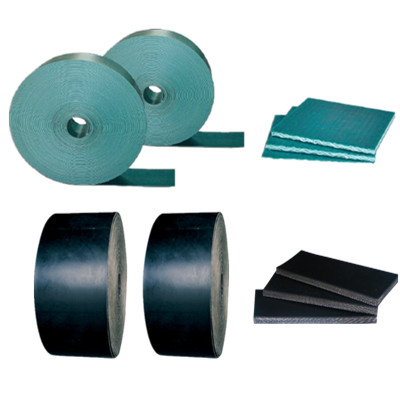
Comparative Test Results of PVC and Rubber Elevator Belts
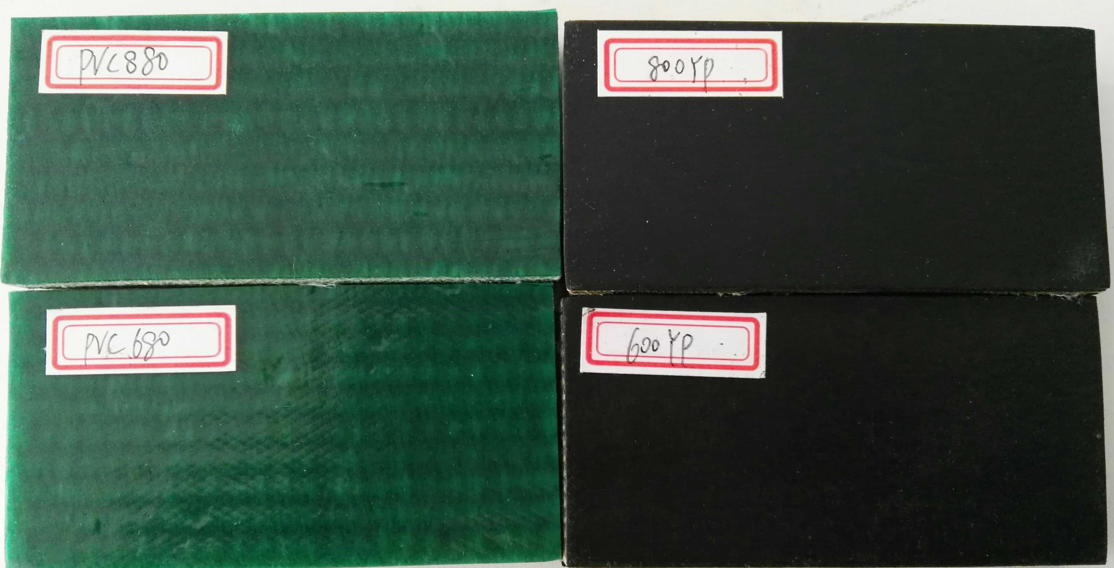
| Product name: PVC Belt / Reformed Rubber Belt | Model: PVC880/800YP | |||
|---|---|---|---|---|
| Test judgment based on:《rubber and plastic bucket elevator HG/T2577-2006》 | ||||
| Test Result | ||||
| Item | Value | Test Standard | ||
| PVC880 | Rubber 800YP | |||
| Carcass Properties | Tensile Strength in Warp N/mm | 955 | 800 | GB/T3690-2009 |
| Elongation at Rated Load % | 0.7 | 1.6 | GB/T3690-2009 | |
| Elongation in Wrap % | 24 | 24 | GB/T3690-2009 | |
| Adhesive strength N/mm | 9 | 4.5 | GB/T532-2008 | |
| Cover characteristic | Bolt thought out resistance N | 11250 | 8500 | 《Test requirements throughout resistance 》 |
| Elongation at Break % | 450 | 420 | GB/T532-2008 | |
| Abrasion Loss mm3 | 80 | 150 | GB/T9867-2008 | |
| Shore hardness Sha | 70 | 60-65(rubber) | GB/T531-92 | |
| Friction factor(with steel) | 0.68 | 0.75 | ISO21182:2005 | |
| Friction factor(with rubber) | 0.86 | Adsorption>1 | ISO21182:2006 | |
| Oil resistant (volume expansion rate)% | 3 | 20 | 《Test method of volume expansion rate》 | |
| Acid-resistant (volume expansion rate)% | 0.8 | 5.2 | 《Test method of volume expansion rate》 | |
| Low-temperature resistant | No delamination or surface cracking observed | GB/T7758-2002 | ||
| Conclusion | For grain and feed processing applications, PVC elevator belts offer better overall performance compared to rubber belts, combining durability, efficiency, and cost-effectiveness. Many large-scale grain and feed processing plants worldwide, especially those using advanced elevator systems, prefer PVC belts as their standard solution. This reflects their proven reliability and widespread use across global markets. | |||
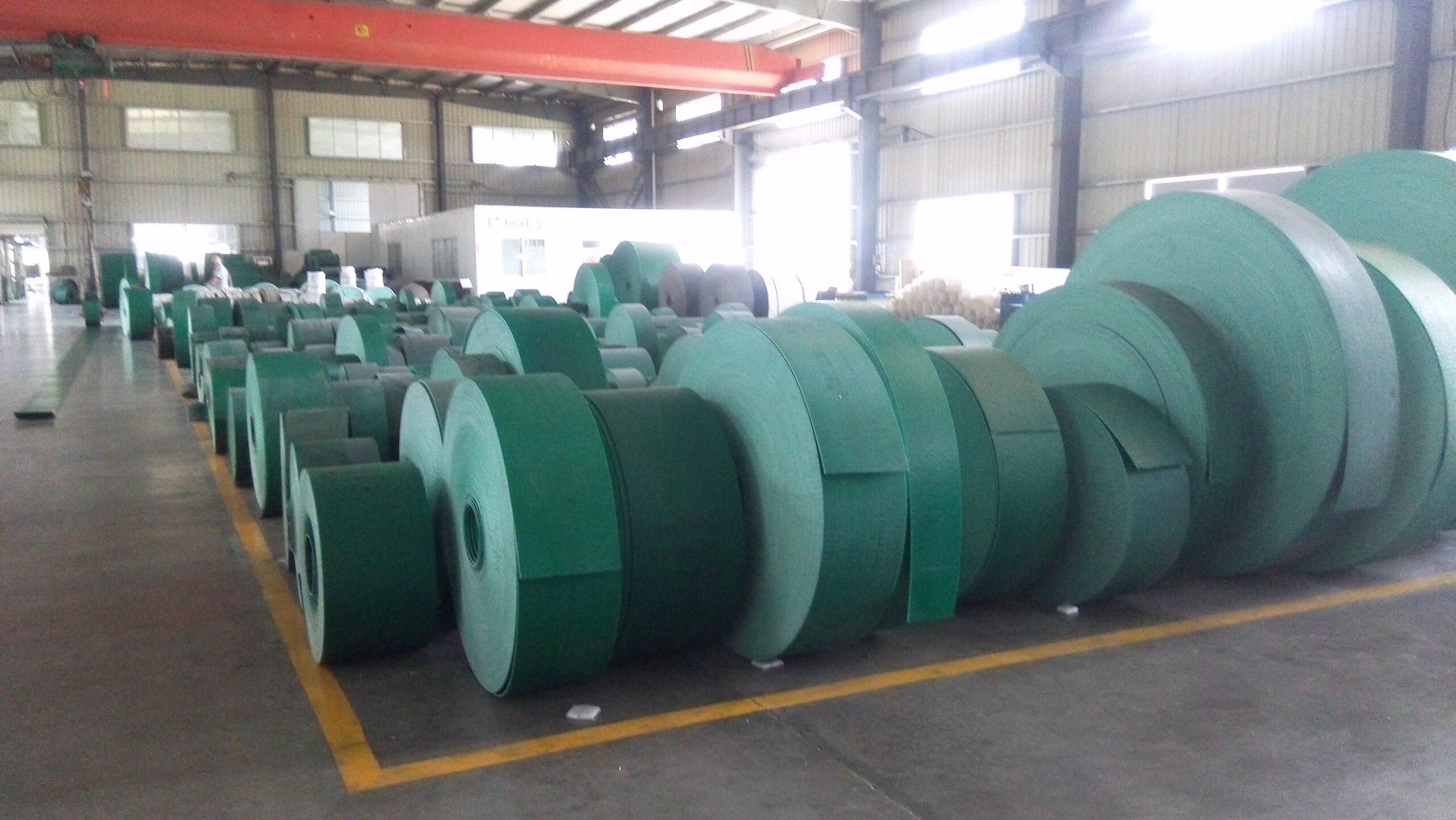
PVC vs Rubber Elevator Belt Comparison
Not sure which belt suits your application? See the comparison below:
| Feature | PVC Elevator Belt | Rubber Elevator Belt |
|---|---|---|
| Structure | Solid woven (one-piece) | Multi-ply laminated |
| Strength Distribution | Even, no weak layers | Layer-dependent, uneven stress |
| Delamination Risk | None | Possible over time |
| Bolt Holding Strength | Excellent | Moderate |
| Weight | Light | Heavy |
| Energy Consumption | Lower | Higher |
| Impact Resistance | Medium | High |
| Application | Grain, feed, food industry | Mining, cement, heavy materials |
| Hygiene / Food Grade | Yes | No |
Rubber elevator belts remain a reliable solution for heavy-duty applications where impact resistance and load capacity are critical.
However, for industries such as grain and feed processing, PVC elevator belts are increasingly preferred due to their lighter weight, better hygiene, and more stable structural performance.
Choosing the right belt depends on your application, load requirements, and working environment.
Ordering Information
• Flexible order quantity – no minimum order required
• Custom belt length and width available
• Installation hole drilling service available for easier assembly
• Technical support provided based on your application
Please feel free to send us your requirements or drawings for a quick quotation.
FAQ – PVC Elevator Belt
What is a PVC elevator belt?
A PVC elevator belt is a conveyor belt made from polyvinyl chloride (PVC) material, designed for bucket elevator systems used in vertical bulk material conveying. It provides flexibility, strength, and reliable bucket attachment performance.
What are PVC elevator belts used for?
PVC elevator belts are commonly used in grain handling, agriculture, feed processing, seed conveying, and light industrial material transport where clean and efficient vertical conveying is required.
What are the advantages of PVC elevator belts?
PVC elevator belts offer good flexibility, lightweight construction, wear resistance, low elongation, and smooth operation in bucket elevator systems.
Is a PVC elevator belt suitable for food or agricultural applications?
Yes, PVC elevator belts are widely used in agricultural and food-related conveying applications because they provide clean material handling and stable conveying performance.
What is the difference between a PVC elevator belt and a rubber elevator belt?
PVC elevator belts are generally lighter and more flexible, making them suitable for lighter-duty conveying applications. Rubber elevator belts are often selected for heavier loads, higher temperatures, or more demanding industrial environments.
How do I choose the correct PVC elevator belt?
Choosing the correct PVC elevator belt depends on belt width, thickness, tensile strength, bucket spacing, conveying capacity, and the type of material being transported.
Are PVC elevator belts resistant to moisture and chemicals?
PVC elevator belts offer good resistance to moisture, oils, and certain chemicals, making them suitable for many agricultural and industrial conveying environments.


